Saturday, 7 April 2012

A to Z: G is for Gravity

Most ships in Traveller have a Manoeuvre Drive. A large percentage of ships have a Jump Drive as well and are defined as Star ships. Manoeuvre Drives are rated in units of acceleration, “g”, from 1G to 6G, where g=dv/dt.

Planetary bodies have surface gravity. On Earth, gravity at the surface is 1G or 9.806 m/s^2. The value of G on other planets is found by the Traveller Book 2 formula G = K(R/4) where G = Surface Gravity, K = Density of the planet in relation to Earth and R = Radius of the planet (which is half of the Diameter statistic discovered during planetary generation).

The ‘real physics’ formula is g =G* M/r^2 where g = gravity, G = the Gravitational constant of 6.67*10^-11, M = Mass, and r = radius of the planet. Unfortunately, you have to convert the mass into kilograms and the radius into metres, and then my brain explodes.

I think the Traveller Book 2 formula gives a result that is pretty workable for a game.

Play roleplaying games and learn physics at the same time.

Friday, 6 April 2012

A to Z: F is for Fusion Gun

“The Fusion Gun, Man-Portable.
For when you absolutely, positively,
have to kill every single oengzoez duevae in the room.”

Staff Sergeant Ahallu Jorgon, Imperial Marines, Ret.
PR Consultant

When my friends and I saw our first copy of Traveller Book 4: Mercenary back in 1980, the first thing we did was turn to the weapons stat page and eagerly scan down it. "Holy Space Biscuits!" we said (well, not exactly, but I do try and keep this blog PG), "16D damage! Excellent! What's an FGMP-14 or 15?"

When Traveller was first published, the rules were presented as a boxed set of three little black A5 booklets - hence the term LBB is often used to describe this first, or Classic, incarnation of the game. While there were rules for making characters and designing star ships and planets, the equipment - the weapons that teenage boys love to festoon their characters with - were strangely conservative and "unscience-fictiony". In fact, the only concession to movies like Star Wars, or TV shows like Star Trek, was the inclusion of the laser rifle and the lighter laser carbine, neither of which were particularly robust. I understand the designers of Traveller had a theory that the most efficient way of stopping an animal or a bad guy in his tracks was to deliver a large amount of kinetic energy, and that a bullet, or something similar, would continue to be the simplest delivery mechanism.

Characters in Traveller, as in most roleplaying games, are defined by a number of characteristic statistics that indicate how strong, dexterous, intelligent, etc, the character is. In Traveller, these stats are generated by rolling two six-sided dice for each characteristic, giving a range of 2 - 12. Wounds and aging can decrease a characteristic to 1 or lower, and certain career results can lift a human's attributes to a maximum of 15. In combat, it is the first three physical characteristics - Strength, Dexterity and Endurance - that determine how much damage a character can take before being killed. A character with average stats of 7 for Strength, Dexterity and Endurance could take 21 points of damage. If an FGMP-15 dishes out 16 dice of damage, for an average of 3 per dice, then one shot does 48 points of damage - over twice the damage an average character can sustain!

By the time Traveller Book 4 was released, development work had produced a lot of the classic tropes that we now associate with the Official Traveller Universe of Classic Traveller - the Third Imperium, the interstellar Nobility, the Imperial Marines, the psionic Zhodani - as well as a technology progression running from Tech Level 0 - Stone Age all the way through to Tech Level 15 - Third Imperium leading edge tech. Indeed, the rule books specifically encouraged Games Masters to look beyond Tech Level 15 for Matter Transporters, black hole manipulation and planet-moving technology - in short all those fantastic things which seem like magic, because we cannot, as yet, fathom the physics or technology that create them.

Plasma and Fusion Guns take advantage of developments in energy technology. Using a laser ignition system to ignite hydrogen fuel, the Plasma Gun holds the resulting plasma in the ignition chamber before releasing it through a magnetically focused field along the barrel of the weapon as a 2cm diameter high-velocity plasma jet. The Fusion Gun, first appearing in a man-portable form at Tech Level 14, contains the plasma slightly longer until a fusion reaction begins to take place. This makes the Fusion Gun more powerful than the Plasma Gun and at Tech Level 15, with a gravitic field generator to negate most of the mass and recoil of the gun, usable by troops not wearing powered armour.

So, you can possibly see the attraction to gun-lovin’ teenage boys, and fun-lovin’ Imperial Marines, of the Sun Gun One Five. The acquisition of such a weapon drove a number of the games we played, given that the Imperial authorities were rather leery of having them fall into civilian hands. We didn’t often get there, but we had a lot of fun trying.

Thursday, 5 April 2012

A to Z: E is for Extrality Line.

In the Official Traveller Universe (or OTU) the Third Imperium rules the stars, but it does not rule the planets of the Third Imperium. Each planet is free to run things its own way and each planetary government has jurisdiction out to Low or Near Orbit. Where a planetary government has jurisdictional claims to other bodies within its local star system, all such jurisdictions are deemed interconnected via a legal fiction, with the Imperial Navy patrolling and protecting the balance of the star system.

Soace Port by Jml MaxwellEvery main world has a designated starport. This may be a Downport on the planet's surface, or a Highport in orbit, or both. A planet may have other subsidiary landing or docking facilities but these are always defined as Space Ports. While Space Ports come under local control (either by local government or by private individuals or corporations) and local jurisdiction, all Starports come under the control of the Imperial Starport Authority and are considered Imperial Territory.

The Extrality Line, or XT Line, is the official boundary of Imperial Territory on any planet or surrounding a Highport in Near Orbit. If an individual can cross the XT line into Imperial Territory, then they are no longer subject to the laws of the host planet. Consequently, the XT line is usually heavily patrolled, on both sides, whether the starport is an A Class trade and shipbuilding hub, or an E Class ferrocrete slab with a tin shack control tower and a beacon array.

Wednesday, 4 April 2012

A to Z: D is for Desert Planet

Think of a desert and you think of sand dunes, palm trees, hot sun.


Think of a desert planet and you might think of sand dunes that go on forever and, perhaps, sandworms (particularly if you’ve read Dune).
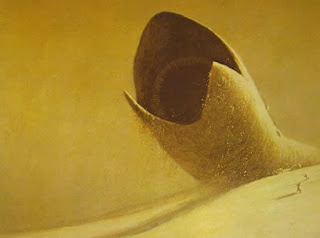
Sandworm

Traveller defines a desert planet as having a Hydrographic Percentage of zero. This means that there is no free standing water – there may be ice caps, and there may be aquifers, but there are no rivers, lakes, or seas.
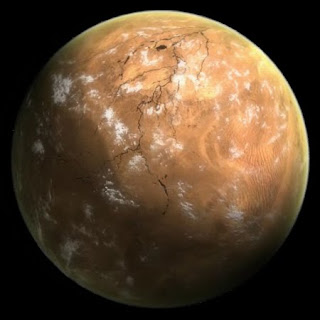
Tatooine

Sounds pretty deserty to me.

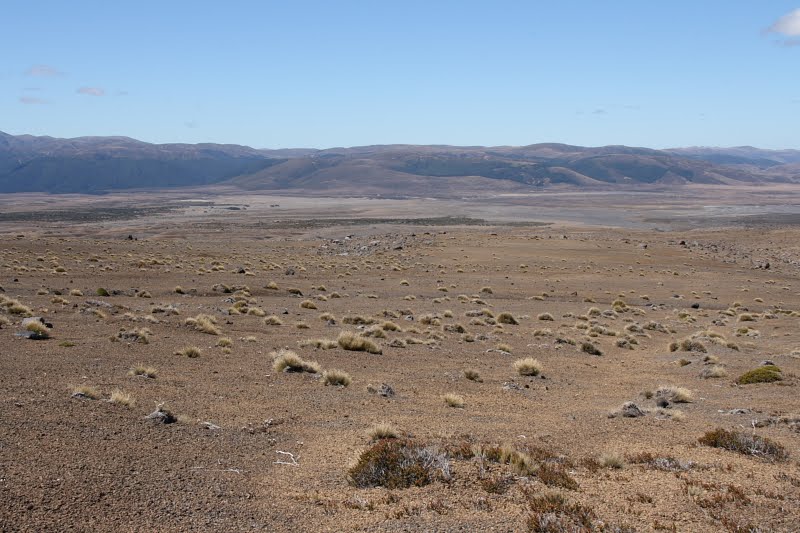
Consider this: In the centre of the North Island of New Zealand, three volcanoes have formed a high plateau. The soil is a mixture of volcanic pumice and sand and is very porous. It is a bleak, cold, windswept place, and very dry. It is known as the Desert Plateau and is an example of a cold desert.

Desert Plateau, North Island New Zealand

In fact, the driest place on earth is the Dry Valley region of Antarctica, not exactly known for its tropical climate, where it has not rained for 2 million years. The Atacama Desert in Peru is more likely to experience snow than rain – it hasn’t rained in 400 years. Parts of Eastern Iran, Afghanistan, and a swath of territory extending north and east across what were the Southern States of the old USSR are cold and dry – this, after all, is the homeland of the famous two-humped Bactrian camel.

Hot deserts and cold deserts.

Having established the criteria for a Desert Planet, then our nearest one is Mars where you have the worst of all climatic combinations – no free standing water; cold; and dust to clog all your vital equipment. Mars even has ice caps.

Mars

Why would anyone chose to live on a Desert Planet?

Ever since Percival Lowell dreamed of canals on Mars, the story of a doomed race clinging to a dying world has resonated through Science Fiction, especially in the planetary romances of the 20s and 30s.

Percival Lowell
"I can see you, John Carter!"

With modern theories of climate change and the fossil record of Earth, we can see how periods of hot dry and cold dry have shaped the world we live in, and offer a more meaningful reason than the poetic “dying world” for a desert planet.

People might move to a desert world in search of natural resources, either in the shifting sands, or buried beneath them, or produced by life forms adapted to the environment – the Spice mélange produced by the Sandworms of Arrakis in Frank Herbert’s Dune novels brings the Spacing Guild and Imperial Forces to the planet Arrakis, which upsets the Fremen already resident there.

A desert planet might be seen as a place of refuge or a place of testing, or even both – the Fremen certainly considered Arrakis as a testing ground, while it hid them from those that oppressed them – stripping away the conceits of civilisation and bringing the people into a state of awareness of themselves and their environment.

For the Adventurer, the desert planet will test fortitude and resourcefulness as they strive to either find what has brought them there, or rescue themselves from the environment. Desert Worlds often conceal secret bases, lost cities or abandoned Ancients sites where fabulous technology or treasures may be found. I have a pirate base on the desert planet Golus in my Traveller campaign; there’s a Forerunner site and pirate base on the desert world orbiting a red dwarf star in Night of Masks by Andre Norton; and there are desert tribes and gangster/pirate bases in the deserts of Tatooine in Star Wars and Return of the Jedi.

Desert Worlds are extreme worlds, and they can be both incredibly interesting backdrops, as well as characters in their own right, in the stories you may want to tell.

Tuesday, 3 April 2012

A to Z: C is for Clone

A clone is an exact copy of something. In the Television Industry, where I work, a dub copy of a master video tape is called a clone. In biology, a clone contains exactly the same DNA sequence as the original life form.

Eloi from The Time machineIn classic Science Fiction the Clone, the Clone army, and the Clone civilisation were relatively common tropes – usually vaguely unsettling and synonymous with the loss of “self’ and individuality, such as “The Stepford Wives” (where it is the “Wives” clone-like behaviour that is unsettling), the “too-perfect” Eloi from “The Time Machine”, the purple-wigged Moonbase Operatives from Gerry Anderson’s UFO, or the Clone soldiers from “Star Wars: The Phantom Menace”.Moonbase Operatives in Gerry Anderson's UFO

The nature of clones and cloning raise interesting ethical and philosophical questions as they force us to examine such things as where are the borders of self, and should the clone and the original be treated as equals under the law? We also must consider what it would be like for the clone – would they instinctively feel a bond with their progenitor; would they have an individual personality or would that, too, be a copy of the original; would they, in effect exist as their own person, irrespective of the fact that they look exactly like their progenitor?

Clone Troopers from Star WarsSince the Star Wars Prequels, and the Clone Wars animated series, Clones appear to have dropped out of favour as science fiction story fodder – at least in an en mass approach to storytelling.

The Dreaming Void by Peter HamiltonPeter Hamilton has come up with a novel use for clones and cloning technology which neatly skirts some of the questions raised above, but which throws up more issues for society to wrestle with. In his Deaming Void series, many people chose to “back-up” their personalities to a memory cache. If something fatal happens to their physical body, a clone body can be grown from stored DNA records and their “back-up” personality downloaded into the new body as it matures. Technically, humans have the option of immortality, downloading their personalities into new bodies as their old ones fail – the ultimate video game where you can hit the Reset button if you really mess up and pick up your life from where you last Saved the game. Hamilton writes himself out of the population explosion corner he was busy writing himself into by indicating that a portion of the Human Race eventually tires of the bodily reincarnation cycle and upload their personalities to his civilization’s equivalent of the Internet, where they pursue their new Transhuman lives until they eventually subsume into the Datasphere.

Cyteen by CJ CherryhAnother interesting treatment of clones is in CJ Cherryh’s Alliance/Union series – in particular in Cyteen and 40,000 in Gehenna, and their appearance to outsiders in the closing chapters of Downbelow Station.

The role-playing game Traveller has never had rules for Clones as, being essentially people, the nature of their “Cloneness” is more about the story telling, rather than any specific game mechanic. In that case, the Games Master is free to explore any of the ethical and moral questions already mentioned, just as the players can respond to the situation as they feel proper.

Grey Aliens by Josh Crockett, Hishan look similarI hadn’t really considered Clones for my own Traveller campaign until I came across the Hishan – an alien race, similar in appearance to the Greys of UFO mythology, in the 5150: A New Beginning skirmish game world from Two Hour Wargames. Short, creepy, cowardly and vicious, the Hishan sound like excellent bad guys – especially when you throw in their semi-Hive Mind, which is a product of their “Cloneness”.

To Clone or not to Clone, now that is a question. Apart from creating a horde of minions relatively quickly (say, 15 years for the bodies to mature if pumped full of steroids – in that case it would be quicker to hire minions), or providing body-doubles, or body spares, why would you clone a population? Solar flare activity renders a species sterile, so they clone to continue their existence? Sub-light speed colonists need to generate a workforce to build a civilisation on a new world? The few survivors of an internecine war need to rebuild their planet? The President for Live would prefer to be surrounded by people who looked like him? Actually, there are quite a number of reasons for clones, and all of them make interesting stories for the players to investigate.

Monday, 2 April 2012

A to Z: B is for Battledress

Imperial Stormtrooper from Star WarsIn yesterday’s post I wrote about Star Wars and Traveller – a story of adventure, and a set of rules that allows a group of people to communally tell a story through what is essentially a game of “let’s pretend”.

One of the iconic images from Star Wars is that of the Imperial Stormtrooper – the foot soldier of the “evil” Empire. Ironically, one of the iconic images from Traveller is that of the Imperial Marine, the rapid reaction force of the Third Imperium (the “good” guys – unless you run a Traveller game where the Imperium is not so benign).
Imperial Marine from Traveller
The Stormtrooper wears what is defined in Traveller terms as Combat Armour – unpowered, full-body armour that may be pressurised for vacuum or low air pressure operations. The Imperial Marine can either be equipped with Combat Armour or, more likely, Battledress – the powered version of combat armour.

Battledress functions very much like an exo-skeleton, enhancing the strength of the operator. This is very useful when the marine is using heavy energy weapons such as the PGMP-13 and the FGMP-14 ("Plasma Gun Man Portable" and "Fusion Gun Man Portable") as the Battledress essentially becomes the gun mount, locking off and absorbing the recoil of these very powerful weapons as they fire.

Battledress is also known as Power Armour, or Dreadnought Armour, or Battle Suit, though not by Imperial forces and, as such, is used by various non-Imperial polities, where they can afford it, and where their technology is sufficiently advanced to micro-engineer the actuators and servos required to cause the suit to both follow and enhance the operator’s movements.

One of the best descriptions of the use and servicing of Battledress I can recall occurs in C. J. Cherryh’s novel Rimrunners, and is well worth reading, both as a novel in its own right, and as an insight into what life as a Marine might be like on board a starship in a shooting war.

Sunday, 1 April 2012

A to Z: A is for A Momentary Lapse of Reason and Aliens

Darn you, Laughing Ferret! Happened by your blog, read that the A to Z Blogging Challenge was about to start, thought “How hard can that be?”, and signed up before I thought it through. D’oh!

And an impressive number of people (1630 as of 21:12 NZT) have signed up for the challenge – Laughing Ferret is number 1467 while this blog is 1480 – covering a huge number of types and interests. Good work, organisers!
So, 26 posts on Traveller-related subjects.

Let’s look at Aliens.

The original, LBB, version of Traveller was human centric – and reflected a lot of the more serious science fiction works of the time. While science fiction was moving away from the “mindless bugs from outer space want to eat all our men and carry off our women” that characterised much of the genre in the 40’s and 50’s, aliens in the 1960’s were either hostile and aloof, or humans in rubber suits. In the late 60’s and early 70’s, the dominate voices in science fiction seemed to turn their gaze inward and we have a series of Dystopian Futures where humanity remains at the bottom of the gravity well, fighting over scraps, even as the Apollo programme was putting humans on the Moon.

Mos Eisley from WookieepediaFor me, the Mos Eisley cantina scene in Star Wars (now Star Wars: A New Hope) showed a view of a multi-species society that mirrored and expanded upon the multi-racial/multi-cultural society we began to see developing here in New Zealand in the 1980’s. It showed a society where star travel and trade was as common as air travel is today. To a boy in his late teens, this future slotted seamlessly over the mechanics of Traveller, and inspired my love of this game that has endured ever since.

As the official Traveller setting grew, we had the theory of Major Races (who developed Jump Drive independently) and Minor Races (who didn’t, but who could, and did, launch sub-light colony ships). It is the Minor Races that I find fascinating in this background, with human, hominid and alien species either evolving in isolation or being planted by Progenitor Races, of which the Ancients appear to have been the oldest example.

While the Major Races have been covered in detail in most versions of Traveller, few of the Minor Races have been explored in depth. This means that, within the over-arching story structure of the Traveller Universe, there are unlimited shorter stories that remain to be told.