Every main world has a designated starport. This may be a Downport on the planet's surface, or a Highport in orbit, or both. A planet may have other subsidiary landing or docking facilities but these are always defined as Space Ports. While Space Ports come under local control (either by local government or by private individuals or corporations) and local jurisdiction, all Starports come under the control of the Imperial Starport Authority and are considered Imperial Territory.Thursday, 5 April 2012
A to Z: E is for Extrality Line.
In the Official Traveller Universe (or OTU) the Third Imperium rules the stars, but it does not rule the planets of the Third Imperium. Each planet is free to run things its own way and each planetary government has jurisdiction out to Low or Near Orbit. Where a planetary government has jurisdictional claims to other bodies within its local star system, all such jurisdictions are deemed interconnected via a legal fiction, with the Imperial Navy patrolling and protecting the balance of the star system.
Every main world has a designated starport. This may be a Downport on the planet's surface, or a Highport in orbit, or both. A planet may have other subsidiary landing or docking facilities but these are always defined as Space Ports. While Space Ports come under local control (either by local government or by private individuals or corporations) and local jurisdiction, all Starports come under the control of the Imperial Starport Authority and are considered Imperial Territory.
The Extrality Line, or XT Line, is the official boundary of Imperial Territory on any planet or surrounding a Highport in Near Orbit. If an individual can cross the XT line into Imperial Territory, then they are no longer subject to the laws of the host planet. Consequently, the XT line is usually heavily patrolled, on both sides, whether the starport is an A Class trade and shipbuilding hub, or an E Class ferrocrete slab with a tin shack control tower and a beacon array.
Every main world has a designated starport. This may be a Downport on the planet's surface, or a Highport in orbit, or both. A planet may have other subsidiary landing or docking facilities but these are always defined as Space Ports. While Space Ports come under local control (either by local government or by private individuals or corporations) and local jurisdiction, all Starports come under the control of the Imperial Starport Authority and are considered Imperial Territory.Wednesday, 4 April 2012
A to Z: D is for Desert Planet
Think of a desert and you think of sand dunes, palm trees, hot sun.

Think of a desert planet and you might think of sand dunes that go on forever and, perhaps, sandworms (particularly if you’ve read Dune).

Traveller defines a desert planet as having a Hydrographic Percentage of zero. This means that there is no free standing water – there may be ice caps, and there may be aquifers, but there are no rivers, lakes, or seas.

Sounds pretty deserty to me.
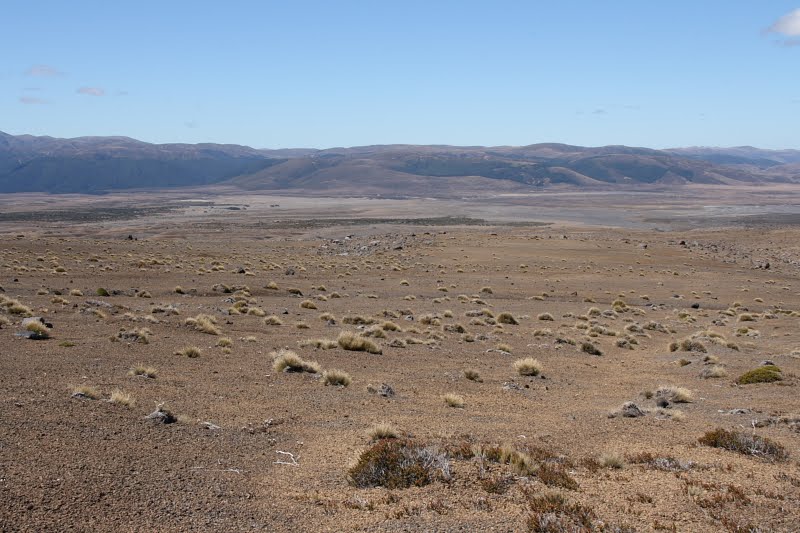
Consider this: In the centre of the North Island of New Zealand, three volcanoes have formed a high plateau. The soil is a mixture of volcanic pumice and sand and is very porous. It is a bleak, cold, windswept place, and very dry. It is known as the Desert Plateau and is an example of a cold desert.

In fact, the driest place on earth is the Dry Valley region of Antarctica, not exactly known for its tropical climate, where it has not rained for 2 million years. The Atacama Desert in Peru is more likely to experience snow than rain – it hasn’t rained in 400 years. Parts of Eastern Iran, Afghanistan, and a swath of territory extending north and east across what were the Southern States of the old USSR are cold and dry – this, after all, is the homeland of the famous two-humped Bactrian camel.
Hot deserts and cold deserts.
Having established the criteria for a Desert Planet, then our nearest one is Mars where you have the worst of all climatic combinations – no free standing water; cold; and dust to clog all your vital equipment. Mars even has ice caps.

Why would anyone chose to live on a Desert Planet?
Ever since Percival Lowell dreamed of canals on Mars, the story of a doomed race clinging to a dying world has resonated through Science Fiction, especially in the planetary romances of the 20s and 30s.

With modern theories of climate change and the fossil record of Earth, we can see how periods of hot dry and cold dry have shaped the world we live in, and offer a more meaningful reason than the poetic “dying world” for a desert planet.
People might move to a desert world in search of natural resources, either in the shifting sands, or buried beneath them, or produced by life forms adapted to the environment – the Spice mélange produced by the Sandworms of Arrakis in Frank Herbert’s Dune novels brings the Spacing Guild and Imperial Forces to the planet Arrakis, which upsets the Fremen already resident there.
A desert planet might be seen as a place of refuge or a place of testing, or even both – the Fremen certainly considered Arrakis as a testing ground, while it hid them from those that oppressed them – stripping away the conceits of civilisation and bringing the people into a state of awareness of themselves and their environment.
For the Adventurer, the desert planet will test fortitude and resourcefulness as they strive to either find what has brought them there, or rescue themselves from the environment. Desert Worlds often conceal secret bases, lost cities or abandoned Ancients sites where fabulous technology or treasures may be found. I have a pirate base on the desert planet Golus in my Traveller campaign; there’s a Forerunner site and pirate base on the desert world orbiting a red dwarf star in Night of Masks by Andre Norton; and there are desert tribes and gangster/pirate bases in the deserts of Tatooine in Star Wars and Return of the Jedi.
Desert Worlds are extreme worlds, and they can be both incredibly interesting backdrops, as well as characters in their own right, in the stories you may want to tell.

Think of a desert planet and you might think of sand dunes that go on forever and, perhaps, sandworms (particularly if you’ve read Dune).

Traveller defines a desert planet as having a Hydrographic Percentage of zero. This means that there is no free standing water – there may be ice caps, and there may be aquifers, but there are no rivers, lakes, or seas.

Sounds pretty deserty to me.
Consider this: In the centre of the North Island of New Zealand, three volcanoes have formed a high plateau. The soil is a mixture of volcanic pumice and sand and is very porous. It is a bleak, cold, windswept place, and very dry. It is known as the Desert Plateau and is an example of a cold desert.

In fact, the driest place on earth is the Dry Valley region of Antarctica, not exactly known for its tropical climate, where it has not rained for 2 million years. The Atacama Desert in Peru is more likely to experience snow than rain – it hasn’t rained in 400 years. Parts of Eastern Iran, Afghanistan, and a swath of territory extending north and east across what were the Southern States of the old USSR are cold and dry – this, after all, is the homeland of the famous two-humped Bactrian camel.
Hot deserts and cold deserts.
Having established the criteria for a Desert Planet, then our nearest one is Mars where you have the worst of all climatic combinations – no free standing water; cold; and dust to clog all your vital equipment. Mars even has ice caps.

Why would anyone chose to live on a Desert Planet?
Ever since Percival Lowell dreamed of canals on Mars, the story of a doomed race clinging to a dying world has resonated through Science Fiction, especially in the planetary romances of the 20s and 30s.

"I can see you, John Carter!"
With modern theories of climate change and the fossil record of Earth, we can see how periods of hot dry and cold dry have shaped the world we live in, and offer a more meaningful reason than the poetic “dying world” for a desert planet.
People might move to a desert world in search of natural resources, either in the shifting sands, or buried beneath them, or produced by life forms adapted to the environment – the Spice mélange produced by the Sandworms of Arrakis in Frank Herbert’s Dune novels brings the Spacing Guild and Imperial Forces to the planet Arrakis, which upsets the Fremen already resident there.
A desert planet might be seen as a place of refuge or a place of testing, or even both – the Fremen certainly considered Arrakis as a testing ground, while it hid them from those that oppressed them – stripping away the conceits of civilisation and bringing the people into a state of awareness of themselves and their environment.
For the Adventurer, the desert planet will test fortitude and resourcefulness as they strive to either find what has brought them there, or rescue themselves from the environment. Desert Worlds often conceal secret bases, lost cities or abandoned Ancients sites where fabulous technology or treasures may be found. I have a pirate base on the desert planet Golus in my Traveller campaign; there’s a Forerunner site and pirate base on the desert world orbiting a red dwarf star in Night of Masks by Andre Norton; and there are desert tribes and gangster/pirate bases in the deserts of Tatooine in Star Wars and Return of the Jedi.
Desert Worlds are extreme worlds, and they can be both incredibly interesting backdrops, as well as characters in their own right, in the stories you may want to tell.
Tuesday, 3 April 2012
A to Z: C is for Clone
A clone is an exact copy of something. In the Television Industry, where I work, a dub copy of a master video tape is called a clone. In biology, a clone contains exactly the same DNA sequence as the original life form.
In classic Science Fiction the Clone, the Clone army, and the Clone civilisation were relatively common tropes – usually vaguely unsettling and synonymous with the loss of “self’ and individuality, such as “The Stepford Wives” (where it is the “Wives” clone-like behaviour that is unsettling), the “too-perfect” Eloi from “The Time Machine”, the purple-wigged Moonbase Operatives from Gerry Anderson’s UFO, or the Clone soldiers from “Star Wars: The Phantom Menace”.
The nature of clones and cloning raise interesting ethical and philosophical questions as they force us to examine such things as where are the borders of self, and should the clone and the original be treated as equals under the law? We also must consider what it would be like for the clone – would they instinctively feel a bond with their progenitor; would they have an individual personality or would that, too, be a copy of the original; would they, in effect exist as their own person, irrespective of the fact that they look exactly like their progenitor?
Since the Star Wars Prequels, and the Clone Wars animated series, Clones appear to have dropped out of favour as science fiction story fodder – at least in an en mass approach to storytelling.
Peter Hamilton has come up with a novel use for clones and cloning technology which neatly skirts some of the questions raised above, but which throws up more issues for society to wrestle with. In his Deaming Void series, many people chose to “back-up” their personalities to a memory cache. If something fatal happens to their physical body, a clone body can be grown from stored DNA records and their “back-up” personality downloaded into the new body as it matures. Technically, humans have the option of immortality, downloading their personalities into new bodies as their old ones fail – the ultimate video game where you can hit the Reset button if you really mess up and pick up your life from where you last Saved the game. Hamilton writes himself out of the population explosion corner he was busy writing himself into by indicating that a portion of the Human Race eventually tires of the bodily reincarnation cycle and upload their personalities to his civilization’s equivalent of the Internet, where they pursue their new Transhuman lives until they eventually subsume into the Datasphere.
Another interesting treatment of clones is in CJ Cherryh’s Alliance/Union series – in particular in Cyteen and 40,000 in Gehenna, and their appearance to outsiders in the closing chapters of Downbelow Station.
The role-playing game Traveller has never had rules for Clones as, being essentially people, the nature of their “Cloneness” is more about the story telling, rather than any specific game mechanic. In that case, the Games Master is free to explore any of the ethical and moral questions already mentioned, just as the players can respond to the situation as they feel proper.
I hadn’t really considered Clones for my own Traveller campaign until I came across the Hishan – an alien race, similar in appearance to the Greys of UFO mythology, in the 5150: A New Beginning skirmish game world from Two Hour Wargames. Short, creepy, cowardly and vicious, the Hishan sound like excellent bad guys – especially when you throw in their semi-Hive Mind, which is a product of their “Cloneness”.
To Clone or not to Clone, now that is a question. Apart from creating a horde of minions relatively quickly (say, 15 years for the bodies to mature if pumped full of steroids – in that case it would be quicker to hire minions), or providing body-doubles, or body spares, why would you clone a population? Solar flare activity renders a species sterile, so they clone to continue their existence? Sub-light speed colonists need to generate a workforce to build a civilisation on a new world? The few survivors of an internecine war need to rebuild their planet? The President for Live would prefer to be surrounded by people who looked like him? Actually, there are quite a number of reasons for clones, and all of them make interesting stories for the players to investigate.
In classic Science Fiction the Clone, the Clone army, and the Clone civilisation were relatively common tropes – usually vaguely unsettling and synonymous with the loss of “self’ and individuality, such as “The Stepford Wives” (where it is the “Wives” clone-like behaviour that is unsettling), the “too-perfect” Eloi from “The Time Machine”, the purple-wigged Moonbase Operatives from Gerry Anderson’s UFO, or the Clone soldiers from “Star Wars: The Phantom Menace”.
The nature of clones and cloning raise interesting ethical and philosophical questions as they force us to examine such things as where are the borders of self, and should the clone and the original be treated as equals under the law? We also must consider what it would be like for the clone – would they instinctively feel a bond with their progenitor; would they have an individual personality or would that, too, be a copy of the original; would they, in effect exist as their own person, irrespective of the fact that they look exactly like their progenitor?
Since the Star Wars Prequels, and the Clone Wars animated series, Clones appear to have dropped out of favour as science fiction story fodder – at least in an en mass approach to storytelling.
Peter Hamilton has come up with a novel use for clones and cloning technology which neatly skirts some of the questions raised above, but which throws up more issues for society to wrestle with. In his Deaming Void series, many people chose to “back-up” their personalities to a memory cache. If something fatal happens to their physical body, a clone body can be grown from stored DNA records and their “back-up” personality downloaded into the new body as it matures. Technically, humans have the option of immortality, downloading their personalities into new bodies as their old ones fail – the ultimate video game where you can hit the Reset button if you really mess up and pick up your life from where you last Saved the game. Hamilton writes himself out of the population explosion corner he was busy writing himself into by indicating that a portion of the Human Race eventually tires of the bodily reincarnation cycle and upload their personalities to his civilization’s equivalent of the Internet, where they pursue their new Transhuman lives until they eventually subsume into the Datasphere.
Another interesting treatment of clones is in CJ Cherryh’s Alliance/Union series – in particular in Cyteen and 40,000 in Gehenna, and their appearance to outsiders in the closing chapters of Downbelow Station.The role-playing game Traveller has never had rules for Clones as, being essentially people, the nature of their “Cloneness” is more about the story telling, rather than any specific game mechanic. In that case, the Games Master is free to explore any of the ethical and moral questions already mentioned, just as the players can respond to the situation as they feel proper.
I hadn’t really considered Clones for my own Traveller campaign until I came across the Hishan – an alien race, similar in appearance to the Greys of UFO mythology, in the 5150: A New Beginning skirmish game world from Two Hour Wargames. Short, creepy, cowardly and vicious, the Hishan sound like excellent bad guys – especially when you throw in their semi-Hive Mind, which is a product of their “Cloneness”.To Clone or not to Clone, now that is a question. Apart from creating a horde of minions relatively quickly (say, 15 years for the bodies to mature if pumped full of steroids – in that case it would be quicker to hire minions), or providing body-doubles, or body spares, why would you clone a population? Solar flare activity renders a species sterile, so they clone to continue their existence? Sub-light speed colonists need to generate a workforce to build a civilisation on a new world? The few survivors of an internecine war need to rebuild their planet? The President for Live would prefer to be surrounded by people who looked like him? Actually, there are quite a number of reasons for clones, and all of them make interesting stories for the players to investigate.
Monday, 2 April 2012
A to Z: B is for Battledress
In yesterday’s post I wrote about Star Wars and Traveller – a story of adventure, and a set of rules that allows a group of people to communally tell a story through what is essentially a game of “let’s pretend”.One of the iconic images from Star Wars is that of the Imperial Stormtrooper – the foot soldier of the “evil” Empire. Ironically, one of the iconic images from Traveller is that of the Imperial Marine, the rapid reaction force of the Third Imperium (the “good” guys – unless you run a Traveller game where the Imperium is not so benign).
The Stormtrooper wears what is defined in Traveller terms as Combat Armour – unpowered, full-body armour that may be pressurised for vacuum or low air pressure operations. The Imperial Marine can either be equipped with Combat Armour or, more likely, Battledress – the powered version of combat armour.
Battledress functions very much like an exo-skeleton, enhancing the strength of the operator. This is very useful when the marine is using heavy energy weapons such as the PGMP-13 and the FGMP-14 ("Plasma Gun Man Portable" and "Fusion Gun Man Portable") as the Battledress essentially becomes the gun mount, locking off and absorbing the recoil of these very powerful weapons as they fire.
Battledress is also known as Power Armour, or Dreadnought Armour, or Battle Suit, though not by Imperial forces and, as such, is used by various non-Imperial polities, where they can afford it, and where their technology is sufficiently advanced to micro-engineer the actuators and servos required to cause the suit to both follow and enhance the operator’s movements.
One of the best descriptions of the use and servicing of Battledress I can recall occurs in C. J. Cherryh’s novel Rimrunners, and is well worth reading, both as a novel in its own right, and as an insight into what life as a Marine might be like on board a starship in a shooting war.
Sunday, 1 April 2012
A to Z: A is for A Momentary Lapse of Reason and Aliens
Darn you, Laughing Ferret! Happened by your blog, read that the A to Z Blogging Challenge was about to start, thought “How hard can that be?”, and signed up before I thought it through. D’oh!
And an impressive number of people (1630 as of 21:12 NZT) have signed up for the challenge – Laughing Ferret is number 1467 while this blog is 1480 – covering a huge number of types and interests. Good work, organisers!
So, 26 posts on Traveller-related subjects.
Let’s look at Aliens.
The original, LBB, version of Traveller was human centric – and reflected a lot of the more serious science fiction works of the time. While science fiction was moving away from the “mindless bugs from outer space want to eat all our men and carry off our women” that characterised much of the genre in the 40’s and 50’s, aliens in the 1960’s were either hostile and aloof, or humans in rubber suits. In the late 60’s and early 70’s, the dominate voices in science fiction seemed to turn their gaze inward and we have a series of Dystopian Futures where humanity remains at the bottom of the gravity well, fighting over scraps, even as the Apollo programme was putting humans on the Moon.
For me, the Mos Eisley cantina scene in Star Wars (now Star Wars: A New Hope) showed a view of a multi-species society that mirrored and expanded upon the multi-racial/multi-cultural society we began to see developing here in New Zealand in the 1980’s. It showed a society where star travel and trade was as common as air travel is today. To a boy in his late teens, this future slotted seamlessly over the mechanics of Traveller, and inspired my love of this game that has endured ever since.
As the official Traveller setting grew, we had the theory of Major Races (who developed Jump Drive independently) and Minor Races (who didn’t, but who could, and did, launch sub-light colony ships). It is the Minor Races that I find fascinating in this background, with human, hominid and alien species either evolving in isolation or being planted by Progenitor Races, of which the Ancients appear to have been the oldest example.
While the Major Races have been covered in detail in most versions of Traveller, few of the Minor Races have been explored in depth. This means that, within the over-arching story structure of the Traveller Universe, there are unlimited shorter stories that remain to be told.
And an impressive number of people (1630 as of 21:12 NZT) have signed up for the challenge – Laughing Ferret is number 1467 while this blog is 1480 – covering a huge number of types and interests. Good work, organisers!
So, 26 posts on Traveller-related subjects.
Let’s look at Aliens.
The original, LBB, version of Traveller was human centric – and reflected a lot of the more serious science fiction works of the time. While science fiction was moving away from the “mindless bugs from outer space want to eat all our men and carry off our women” that characterised much of the genre in the 40’s and 50’s, aliens in the 1960’s were either hostile and aloof, or humans in rubber suits. In the late 60’s and early 70’s, the dominate voices in science fiction seemed to turn their gaze inward and we have a series of Dystopian Futures where humanity remains at the bottom of the gravity well, fighting over scraps, even as the Apollo programme was putting humans on the Moon.
For me, the Mos Eisley cantina scene in Star Wars (now Star Wars: A New Hope) showed a view of a multi-species society that mirrored and expanded upon the multi-racial/multi-cultural society we began to see developing here in New Zealand in the 1980’s. It showed a society where star travel and trade was as common as air travel is today. To a boy in his late teens, this future slotted seamlessly over the mechanics of Traveller, and inspired my love of this game that has endured ever since. As the official Traveller setting grew, we had the theory of Major Races (who developed Jump Drive independently) and Minor Races (who didn’t, but who could, and did, launch sub-light colony ships). It is the Minor Races that I find fascinating in this background, with human, hominid and alien species either evolving in isolation or being planted by Progenitor Races, of which the Ancients appear to have been the oldest example.
While the Major Races have been covered in detail in most versions of Traveller, few of the Minor Races have been explored in depth. This means that, within the over-arching story structure of the Traveller Universe, there are unlimited shorter stories that remain to be told.
Sunday, 11 March 2012
100th Post
Mega Trade Part 2 – my previous post – was actually a bit of a mile-stone article in the life of this blog. It was the Big ‘C Note’, the ‘One Tonner’, the 100th Post.
This, on one hand, goes to show just how silly stats and post numbers are, as some of my posts are barely worth the cost of the electrons that gave their all for them. On the other hand, it does indicate that I have been able to maintain some sort of consistency, or persistence, of posting over the last 26 months or so, and that I’m still enjoying writing about Traveller and model making and painting.
My computer suffered a terminal Windows boot meltdown a couple of weeks ago which has been a major pain in the fundamental posterior orifice. Since then I have had to fight for processor time with my daughter on her machine. Fortunately, as my old machine had been getting a little erratic, I had bought a Terabyte external drive and shifted all my pictures, music and general files, including my website, gaming and blog files, over to it some months ago. So, when Windows finally broke, the only really important files I lost access to were my business emails, and my contact list, which included the logon for my website. This makes updating it a little difficult.
“Bother”, as the Great Sage, Winney the Pooh, said.
Anyway, enough pity party.
I’ve just finished painting a pack of Twanax Horde from Blue Moon Manufacturing, as well as a couple of packs of Ground Zero Games Hammer’s Slammers figures, and a starship captain from Khurasan Miniatures. What these figures have in common, apart from being fun to paint, is a slight pulpish air about them. This is rather fortuitous as I’ve just finished reading my new copy of Blasters and Bulkheads.
While B&B has a very strong Star Wars vibe about, it does claim to be a more generic Pulp/Space Opera Science Fiction Skirmish game, and I can see that you could play out Van Vogt’s Lensmen-based games or even Dominic Flandry scenarios or adventures from Andre Norton’s stories. B&B has one of the better quick-play psionic combat systems I’ve read, and I like the way that the focus is on characters, with minions or henchmen coming along for the ride as mobile scenery. I’m really looking forward to playing B&B, and seeing if I can poach some ideas for 5150: New Beginnings – which has a much better solo play aspect.
Getting back to the figures – the Twanax are basically Yetis, and while I painted them up in shades of brown, I’m now thinking that I need to get a second pack to paint up in greys and whites as Abominable Snowmen, for my GZG Scan Fed figures and for the Snow Troopers/Pulp-guys-that-get-eaten-by-The-Thing that Khurasan Jon is talking about releasing in a couple of months.
The Slammers figures from Ground Zero Games are quite fun in a retro sort of way. I thought of them as being light troops or dragoons and bought enough skimmers to have two ground squads and a squad mounted on the little one-man grav bikes. After dithering over how to paint them, I went with a grey splotch camouflage over Olive Green – a fairly conventional paint job. While they lack the body armour we tend to associate with modern soldiers,
the detail on the figures suggests that they wear some sort of harness. I’m seriously thinking of getting another couple of packs to paint up in a more pulpy dress uniform style as palace guard. Mixing the visor-up with the visor-down packs works for me, though the visor down with more solemn uniform colours could make them look more ‘faceless’ and ‘oppressive regime’ type troopers. Either way, they are very nice figures.
The starship captain from Khurasan Miniatures is part of the DPLS spaceship crew pack (TTC-2501). He always seems to be painted up in the style of Han Solo, which made me think Lando Calrissian, and this is what I attempted.
So, in the midst of the computer frustrations, I have managed to complete some figures that I'm very happy with.
This, on one hand, goes to show just how silly stats and post numbers are, as some of my posts are barely worth the cost of the electrons that gave their all for them. On the other hand, it does indicate that I have been able to maintain some sort of consistency, or persistence, of posting over the last 26 months or so, and that I’m still enjoying writing about Traveller and model making and painting.
My computer suffered a terminal Windows boot meltdown a couple of weeks ago which has been a major pain in the fundamental posterior orifice. Since then I have had to fight for processor time with my daughter on her machine. Fortunately, as my old machine had been getting a little erratic, I had bought a Terabyte external drive and shifted all my pictures, music and general files, including my website, gaming and blog files, over to it some months ago. So, when Windows finally broke, the only really important files I lost access to were my business emails, and my contact list, which included the logon for my website. This makes updating it a little difficult.
“Bother”, as the Great Sage, Winney the Pooh, said.
Anyway, enough pity party.
I’ve just finished painting a pack of Twanax Horde from Blue Moon Manufacturing, as well as a couple of packs of Ground Zero Games Hammer’s Slammers figures, and a starship captain from Khurasan Miniatures. What these figures have in common, apart from being fun to paint, is a slight pulpish air about them. This is rather fortuitous as I’ve just finished reading my new copy of Blasters and Bulkheads. While B&B has a very strong Star Wars vibe about, it does claim to be a more generic Pulp/Space Opera Science Fiction Skirmish game, and I can see that you could play out Van Vogt’s Lensmen-based games or even Dominic Flandry scenarios or adventures from Andre Norton’s stories. B&B has one of the better quick-play psionic combat systems I’ve read, and I like the way that the focus is on characters, with minions or henchmen coming along for the ride as mobile scenery. I’m really looking forward to playing B&B, and seeing if I can poach some ideas for 5150: New Beginnings – which has a much better solo play aspect.
Getting back to the figures – the Twanax are basically Yetis, and while I painted them up in shades of brown, I’m now thinking that I need to get a second pack to paint up in greys and whites as Abominable Snowmen, for my GZG Scan Fed figures and for the Snow Troopers/Pulp-guys-that-get-eaten-by-The-Thing that Khurasan Jon is talking about releasing in a couple of months.
The Slammers figures from Ground Zero Games are quite fun in a retro sort of way. I thought of them as being light troops or dragoons and bought enough skimmers to have two ground squads and a squad mounted on the little one-man grav bikes. After dithering over how to paint them, I went with a grey splotch camouflage over Olive Green – a fairly conventional paint job. While they lack the body armour we tend to associate with modern soldiers,
the detail on the figures suggests that they wear some sort of harness. I’m seriously thinking of getting another couple of packs to paint up in a more pulpy dress uniform style as palace guard. Mixing the visor-up with the visor-down packs works for me, though the visor down with more solemn uniform colours could make them look more ‘faceless’ and ‘oppressive regime’ type troopers. Either way, they are very nice figures.
The starship captain from Khurasan Miniatures is part of the DPLS spaceship crew pack (TTC-2501). He always seems to be painted up in the style of Han Solo, which made me think Lando Calrissian, and this is what I attempted.So, in the midst of the computer frustrations, I have managed to complete some figures that I'm very happy with.
Wednesday, 7 March 2012
Mega Trade 2
Ship: Karuthara
Class: Daiishaluur
Type: Megahauler
Architect: David Billinghurst
Tech Level: 12
| USP | AH- | L431343- | 090000- | 60000-0 | MCr 11,348.916 | 20 KTons |
| Bat Bear | 1 | A | Crew: 144 | |||
| Bat | 1 | A | TL: 12 |
Cargo: 7,402.000 Passengers: 150 Low: 100 Fuel: 6,600.000 EP: 600.000 Agility: 1 Shipboard Security Detail: 20 Craft: 5 x 200T Mechamaarii Lighter
Fuel Treatment: On Board Fuel Purification
Architects Fee: MCr 108.603 Cost in Quantity: MCr 9,176.865
Ship: Masasanaii
Class: High Veenoir
Type: Megahauler
Architect: David Billinghurst
Tech Level: 15
| USP | AH- | L431343- | 090000- | 70000-0 | MCr 7,493.110 20 KTons |
| Bat Bear | 1 | A | Crew: 132 | ||
| Bat | 1 | A | TL: 15 |
Cargo: 8,749.000 Passengers: 150 Low: 100 Fuel: 6,600.000 EP: 600.000 Agility: 1 Shipboard Security Detail: 20 Craft: 5 x 200T Calurmajurii Lighter
Fuel Treatment: On Board Fuel Purification
Architects Fee: MCr 72.542 Cost in Quantity: MCr 6,042.272
Having constructed my 20,000 ton megahaulers, the TL12 Daiishaluur and the TL15 High Veenoir, I needed to look at their running costs to determine whether freighters of this size were viable. To establish running costs, I hauled out LBB Book 2 Starships and began to crank up the numbers. As Book 2 says, “There are five basic expenses (in addition to the bank payment, if necessary) associated with starship operation:Fuel ..., Life Support ..., Routine Maintenance ..., Crew Salaries ..., and Berthing Costs ...”
Fuel:
The five lighters each megahauler carries are equipped with fuel scoops and processors and can scoop hydrogen from gas giants to refuel the unstreamlined haulers. Alternatively, the megahaulers can load unrefined fuel at the local highport and run it through their on-board fuel processors while the lighters handle passengers, cargo or freight.
| Daiishaluur TL12 | High Veenoir TL15 |
| Fuel Tankage: 6,600 tons | Fuel Tankage: 6,600 tons |
| Lighter Fuel Tankage: 6 tons x 5 = 30 | Lighter Fuel Tankage: 6 tons x 5 = 30 |
| Cost: Cr 100 x 6,630 = Cr 663,000 | Cost: Cr 100 x 6,630 = Cr 663,000 |
Life Support:
Each stateroom involves an overhead of Cr 2,000 per Jump while each low berth costs Cr 100.
| Daiishaluur TL12 | High Veenoir TL15 |
| 294 Staterooms, 100 Low Berths | 282 Staterooms, 100 Low Berths |
| Lighters | Lighters |
| (17 Staterooms, 10 Low Berths) x 5 | (13 Staterooms, 10 Low Berths) x 5 |
| 294 + 17 x 5 = 379 Staterooms | 282 + 13 x 5 = 347 Staterooms |
| Cost: 379 x 2,000 = Cr 758,000 | Cost: 347 x 2,000 = Cr 694,000 |
| 100 + 50 = 150 low berths | 100 + 50 = 150 low berths |
| Cost: 150 x 100 = Cr 15,000 | Cost: 150 x 100 = Cr 15,000 |
| Total Life Support: Cr 773,000 per Jump | Total Life Support: Cr 709,000 per Jump |
Routine Maintenance:
Annual routine maintenance takes two weeks and costs 0.1% of the cash price of the ship.
| Daiishaluur TL12 | High Veenoir TL15 | MCr 8,688.205 | MCr 5,803.352 |
| Lighters (x5) | Lighters (x5) |
| MCr 390.93 | MCr 238.92 |
| Total Cost: MCr 9,079.135 | Total Cost: MCr 6042.272 |
| Maintenance | |
| MCr 9,079.135 x 0.1% = MCr 9.079 p.a. | MCr 6042.272 x 0.1% = MCr 6.042 p.a. |
| Or Cr 363,160 per two weeks | Or Cr 241,680 per two weeks |
Crew Salaries:
The Daiishaluur has a crew of 17 Officers, 127 Ratings: 11 Command, 30 Engineering, 12 Gunnery, 31 Flight (Flight Control Officer, a service person for each Mechamaarii Class Lighter, plus each Lighter has a crew of: Pilot, Engineer, Steward, Medic, Gunner), 40 Services, 20 Security.
The High Veenoir has a crew of 16 Officers, 116 Ratings: 11 Command, 18 Engineering, 12 Gunnery, 31 Flight (Flight Control Officer, a service person for each Calurmajurii Class Lighter, plus each Lighter has a crew of: Pilot, Engineer, Steward, Medic, Gunner), 40 Services, 20 Security.
| Daiishaluur TL12 | High Veenoir TL15 |
| Commanding Officer @ Cr 7,200 | Commanding Officer @ Cr 7,200 |
| Executive Officer @ Cr 6,600 | Executive Officer @ Cr 6,600 |
| Computer Officer @ Cr 4,500 | Computer Officer @ Cr 4,500 |
| Navigation Officer @ Cr 5,500 | Navigation Officer @ Cr 5,500 |
| Navigation Officer @ Cr 5,000 | Navigation Officer @ Cr 5,000 |
| Medical Officer @ Cr 2,400 | Medical Officer @ Cr 2,400 |
| Communications Officer @ Cr 4,000 | Communications Officer @ Cr 4,000 |
| 4 x Ratings @ Cr 450 = Cr 1,800 | 4 x Ratings @ Cr 450 = Cr 1,800 |
| Chief Engineer @ Cr 4,800 | Chief Engineer @ Cr 4,800 |
| Second Engineer @ Cr 4,400 | Second Engineer @ Cr 4,400 |
| 28 x Engineers @ Cr 4,000 = Cr 112,000 | 16 x Engineers @ Cr 4,000 = Cr 64,000 |
| Chief Gunnery Officer @ Cr 1,200 | Chief Gunnery Officer @ Cr 1,200 |
| 2 x Petty Officers @ Cr 1,100 = Cr 2,200 | 2 x Petty Officers @ Cr 1,100 = Cr 2,200 |
| 9 x Gunners @ Cr 1,000 = Cr 9,000 | 9 x Gunners @ Cr 1,000 = Cr 9,000 | Flight Control Officer @ Cr 5,000 | Flight Control Officer @ Cr 5,000 |
| 5 x Pilots @ Cr 6,000 = Cr 30,000 | 5 x Pilots @ Cr 6,000 = Cr 30,000 |
| 5 x Engineers @ Cr 4,000 = Cr 20,000 | 5 x Engineers @ Cr 4,000 = Cr 20,000 |
| 5 x Stewards @ Cr 3,000 = Cr 15,000 | 5 x Stewards @ Cr 3,000 = Cr 15,000 |
| 5 x Medics @ Cr 2,000 = Cr 10,000 | 5 x Medics @ Cr 2,000 = Cr 10,000 |
| 5 x Gunners @ Cr 1,000 = Cr 5,000 | 5 x Gunners @ Cr 1,000 = Cr 5,000 |
| 5 x Lighter Maintenance @ Cr 450 = Cr 2,250 | 5 x Lighter Maintenance @ Cr 450 = Cr 2,250 |
| 40 x service Crew @ Cr 450 = Cr 18,000 | 40 x Service Crew @ Cr450 = Cr 18,000 |
| 20 x Security Crew @ Cr 450 = Cr 9,000 | 20 x Security Crew @ Cr 450 = Cr 9,000 |
| Total: Cr 284,850 per month | Total: Cr 236, 850 per month |
Berthing Costs:
Typically, berthing fees are Cr 100 for the first six days, and then Cr 100 per day thereafter. In the case of a vessel such as a megahauler, this more likely represents a fee charged by Local Traffic Control to keep space clear around the megahauler and its Lighters.
Purchase Payments:
After deducting the 20% downpayment to commence the build, standard payments of 1/240th of the purchase price per month for 480 months are normally required on a starship purchase. It is possible that part of this outlay would come off the corporate tax bill if the purchasing megacorp’s accountants are earning their fees.
| Daiishaluur TL12 purchase cost: | High Veenoir TL15 purchase cost: |
| MCr 8,688.205 | MCr 5,803.352 |
| Lighters (x5) | Lighters (x5) |
| MCr 390.93 | MCr 238.92 |
| Total Cost: MCr 9,079.135 | Total Cost: MCr 6042.272 |
| Less 20% deposit = MCr 7263.308/240 | Less 20% deposit = MCr 4833.818/240 |
| = MCr 30.264 per month | = MCr 20.14 per month |
Fortnightly Fees:
Having generated all these numbers, it’s time to pull them all together. It is easiest to work around the two-week standard Jump cycle and this is what I have done.
| Expenses | Daiishaluur TL12: | High Veenoir TL15: |
| Fuel: | Fuel: |
| Cost: Cr 100 x 6,630 = Cr 663,000 | Cost: Cr 100 x 6,630 = Cr 663,000 |
| Life Support: | Life Support: |
| Total Life Support: Cr 773,000 per Jump | Total Life Support: Cr 709,000 per Jump |
| Maintenance: | Maintenance: |
| Cr 363,160 per two weeks | Cr 241,680 per two weeks |
| Crew Salaries: | Crew Salaries: |
| Total: Cr 142,425 per fortnight | Total: Cr 118,425 per fortnight |
| Bank Payments: | Bank Payments: |
| MCr 15.132 per fortnight | MCr 10.07 per fortnight |
| Total: Cr 17,073,585 per fortnight | Total: Cr 11,802,105 per fortnight |
| Potential Revenue | |
| Daiishaluur TL12: | High Veenoir TL15: |
| 50 High Passengers @ Cr10,000 = Cr500,000 | 50 High Passengers @ Cr10,000 = Cr500,000 |
| 100 Middle Passengers @Cr8,000 = Cr800,000 | 100 Middle Passengers @Cr8,000 = Cr800,000 |
| 100 Low Passengers @ Cr1,000 = Cr100,000 | 100 Low Passengers @ Cr1,000 = Cr100,000 |
| 7,402 Tons Cargo @ Cr1,000 = Cr7,402,000 | 8,749 Tons Cargo @ Cr1,000 = Cr8,749,000 |
| Total: Cr8,802,000 | Total: Cr10,149,000 |
| Potential Revenue from Lighters | |
| 25 High Passengers @ Cr10,000 = Cr250,000 | 25 High Passengers @ Cr10,000 = Cr250,000 |
| 25 Middle Passengers @Cr8,000 = Cr200,000 | 25 Middle Passengers @Cr8,000 = Cr200,000 |
| 50 Low Passengers @ Cr1,000 = Cr50,000 | 50 Low Passengers @ Cr1,000 = Cr50,000 |
| 360 Tons Cargo @ Cr1,000 = CrCr360,000 | 475 Tons Cargo @ Cr1,000 = Cr475,000 |
| Total: Cr860,000 | Total: Cr975,000 |
| Total Potental Revenue: | Total Potental Revenue: |
| Cr9,662,000 | Cr11,124,000 |
As we can see, if financed in the traditional manner the Megahauler loses money. The deal killer in the leveraged model is the fortnightly payments required to service the loan to buy the ship.
At TL12, without the bank payments, the Daiishaluur Class costs Cr 142,425 per fortnight to run and generates Cr 8,802,000 from passengers and freight (assuming a full load of both). If the Daiishaluur jumps with its Lighters fully loaded as well, it could generate up to Cr 9,662,000. This equates to a profit of between Cr 8,659,575 and Cr 9,519,575 per jump – even if the ship is only half full and its Lighters are empty, it will generate Cr 4,258,575 over expenses. At TL15, the High Veenoir costs Cr 118,425 per fortnight to run and generates between Cr 10,149,000 and Cr 11,124,000 – let’s say Cr 4,956,075 over expenses with a half-empty ship and empty Lighters.
For a corporation or Megacorporation wishing to run Megahaulers, there are two possible funding options – increase the initial downpayment above the standard 20% to reduce the fortnightly payments, or secure a Subsidised Merchant contract at either Subsector or Sector level with Imperial authorities. In the latter case, the government picks up the bank loan for the ship for the forty year loan period and splits the profits with the corporation, while the corporation effectively ends up with a forty-year management contract running the ship before taking full possession at the contract’s termination.
Now, this seems a bit like money for jam for the corporation, except that the Subsidised Merchant contract is usually to provide a service on a particular route which leaves little lee-way for speculative trading or shifting routes to chase the trade. Furthermore, the Subsidised Merchant becomes part of the Navy Fleet Auxilary and can be called up for military service with little warning, even after the initial contract expires. Though, having secured Navy-surplus centralized Fire Control systems during the initial design process, the building corporation must have had Subsidised Merchant contracts firmly in their sights.
Having said that, I can easily see corporations, such as A.K.I. Interstellar’s Heavy Transport Division, running a dozen, or more, High Veenoir Class Megahaulers on the the Bryak – Anar route alone. This would ensure a ship movement at each port every couple of days. And even with this amount of shipping constantly on the move, there would be plenty of freight for all the myriad of smaller merchantmen, tramp traders, and adventurers struggling with their payments.
Subscribe to:
Posts (Atom)